This site will highlight many of the maintenance practices undertaken at WR, as well as showcase special and on going projects. It will expand on points referenced in my Weekly Updates that are posted on the WR website. It will touch on course etiquette and highlight how we can work together to preserve playing conditions and improve the overall golf experience at WR, one of the premier courses in Ventura county
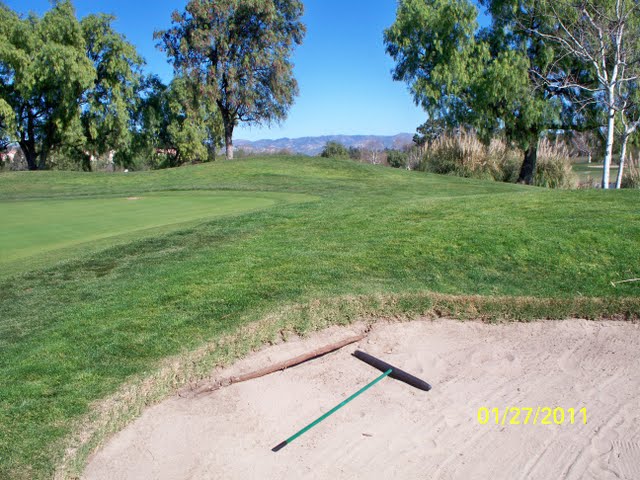
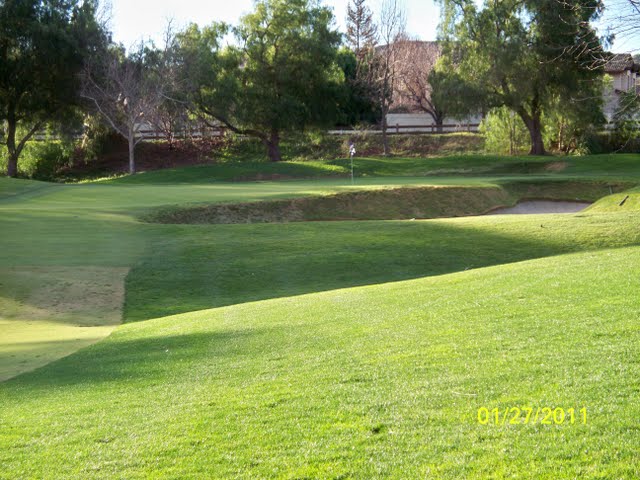
Here are some recent pictures of WR. Note the root intrusion in the pot bunker to the right of #2. That section was at least 50' from the nearest tree. Makes you wonder how extensive the system is under the green.
We just completed the first of four annual greenside bunker audits. We added 12 tons of sand. The pictures here are of pondside left of #3 green. The drainage is on the Dr Range left side as we attempt to pick up the culvert overflow.
As 2010 draws to a close it is good to reflect on why we love golf. Its challenge both physically and mentally. The beauty and infinite variability, in strategy, design and landscaping of the playing field. The opportunity to be outside, breathing fairy good air. The enjoyment we get from spending time with family and friends and the nuturing of those friendships. The opportunity to cross age, race and gender to really connect with people on a personal level. Oh yeah and it is fun too!! Even a bad ball striking day on the course is still way better than spending our week trying to find a source of potable drinking water. Or enough food to feed our families. Or dodging bullets, landmines, human explosives and all other manner of human (or inhuman ) crazyness that much of the world finds itself in.
For me, I have the added bonus of the golf course being my office. Each day has its own challenges as no two days are alike. Sure we can go a period of time of relative consistency but all the variables; the weather, equipment, labor, water, financials, they can all change in an instant. It's what keeps it interesting. As I enter my 21st year in turf management, I still love what I do day in and day out (sure, some days more than others !) and there is always something to learn, something to do better. Thanks for your support this year and I am confident that 2011 will be even better.
There is however, one thing that I know I will never be able to do- dance like Fred Astaire. Check out this golfing video from the dance master.
It's that time of year again when we have to consider frost delays. Generally there are "hard Frosts" and "light frosts". The hard frost is when the entire leaf and crown of the plant are frozen solid. This is characterized by the white sheen over the entire surface and the crunching sound the turf makes when pressed. This type of frost is also characterized by the fact that the turf does not spring back when you run your hand through it. This is the most devestating frost as the crown, the brain of the plant, is frozen and when crushed, it will absolutely lead to plant death. Any traffic across this will leave damage. A substantial delay should be expected. This frost usually occurs when temperatures are very low and/or a rain event has occured during the evening.
The second type is a lighter frost. This is characterized by powderey ice crystals that flake off when brushed. The turf does spring back. The delay for this type are generally shorter.Please remember that the temperatures often drop just before sunrise and that certain areas of the course simply take longer to thaw out. Holes 2,4,5 are consistently the last to thaw. When we do have a delay, we ask that you follow the proshop directions. We will usually have the PG's closed and we will institute cart restrictions in an effort to begin play as soon as possible. We appreciate your cooperation as we work to preserve our conditions at WR.
The following video highlights the condition of the ice formation during frost. It follows the really bad acting, so hang in there.
This week saw us topdress and verticut our greens. This is a necessary cultural practice, vital for the long term viability of the playing surface. While the surface is disrupted for a few days immediately following the procedure, evening watering to push the sand through the surface and mowing and rolling have the greens back in great shape 3 days later. At WR, we catch our clipping in baskets due to the aggressive nature of our process and the desire to remove a large amount of organic material. This procedure will be once a month throughout the year with varying degrees of aggressiveness. This short video outlines a few of the benefits. http://www.gcsaa.tv/view.php?id=264
Here are a few photos 4 weeks after our 2010 overseed. With some great weather including alternating weeks of cool and heat, together with 2 great all day soaker rain events giving us 3/4" of rain, coupled with some perfectly timed fertilizer,wetting agent and growth regulation applications, I am very happy (but never satisfied) with the result.How did we do?
Please note that the fairways were NOT overseeded in 2010. The awesome playing surface is actually our hybrid 419 bermudagrass thriving in late October. How cool is that!
Recently I was in Lawrence, KS as part of GCSAA's (our national superintendent's association) Environmental Committee. While there I viewed some walking greens mowers and bunker rakes in GCSAA's museum. It's remarkable how little the reels on the mowers have changed in 150 years. The bunker rake would certainly return the bunkers to a hazard. 1 extra mulligan/gimme to anyone who can identify the distinguished gentleman on the left of the final photo. He is considered by many to be the "father of greenkeeping" who early on saw the benefits of topdressing by noting how well the turf grew under the sand he inadvertantly spilled. He also was the first to use a metal cup to protect the integrity of the hole and he wasn't a bad stick either winning 4 majors.
Next week we will return to WR as our in house video production staff (actually it's me and Patrick)highlight some cart tips to help us keep our roughs looking awesome. Have a great golfing week.